
Analysis of Volatile Organic Compounds (VOC)
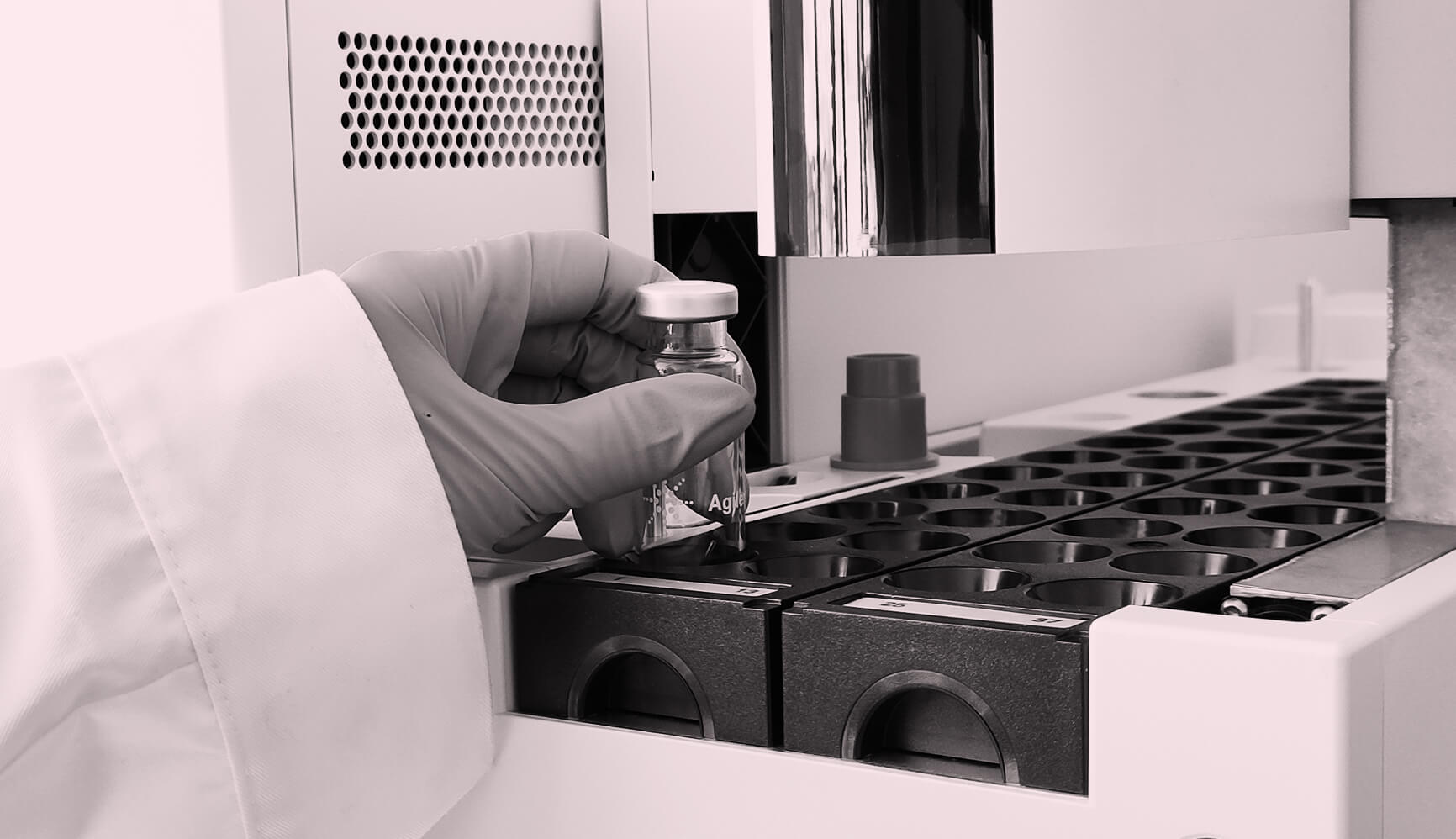
The 6NAPSE Group laboratories carry out the analysis of Volatile Organic Compounds (VOCs) using either the HS-GCMS or GCMS technique.
VOC analysis in laboratory
Our laboratories perform Volatile Organic Compound (VOC) analysis. We assist industrial companies in the search for residual solvents in products and intermediate substances or mixtures. We carry out services to identify and quantify VOCs present in water, soil, and materials.
- VOC Analysis in Drinking Water and Wastewater
- VOC Analysis in Soil and Sediment
- VOC Emission Analysis from Materials and Products
- Identification and Quantification of Specific VOCs
- BTEX Analysis: Benzene, Toluene, Ethylbenzene, and Xylenes
- Liquid Solvent Analysis (1,2-Dichloroethane, 1,1,1-Trichloroethane, 1,1-
- Dichloroethylene, etc.)
- Volatile Solvent Analysis (methanol, ethanol, acetone, ether, trichloroethylene, etc.)
- Residual Solvent Analysis in Pharmaceutical Products (ICH Q3C)
- Propanol Determination
- Benzene Determination
- VOC Analysis of Building Materials and Various Coatings in Accordance with ISO 16000
- Formaldehyde VOC Analysis of Furniture Wood
- VOC Analysis in Consumer Products/Goods
- VOC Analysis of Paints and Varnishes in Accordance with ISO 11890
- VOC Analysis in Inks
- VOC Analysis for the Automotive Sector
What are VOCs ?
Volatile Organic Compounds (VOCs) are a large family of chemical substances characterized by a low boiling point. This property allows them to evaporate easily at room temperature, whether they are initially in liquid or solid form.
Due to their volatility, VOCs can disperse over long distances from their source of emission, causing direct or indirect adverse effects on the environment, animals, and human health (irritation, respiratory problems, etc.). They are therefore among the main air pollutants.
VOCs include alkanes, alkenes, aromatic hydrocarbons, ethers, aldehydes, and more. In total, more than 400 types of VOCs can be identified in the air. The most common are acetaldehyde, benzene, dichloromethane, formaldehyde, perchloroethylene, toluene, xylene.
What standards govern VOCs?
Several standards govern emissions and levels of Volatile Organic Compounds (VOCs) internationally.
Here are the main ones:
- ISO standards: standards relating to air quality and VOC analysis methods.
- Directive 2004/42/EC: limits VOC emissions due to the use of organic solvents in certain paints and varnishes.
- Directive 2010/75/EU (IED Directive): emission limit values for VOCs from industrial installations.
6NAPSE Group assets
- Complete validation plan (support for all tests of a standard)
- Precise analysis at the nanoscale
- Materials database
- Additional analyzes possible with other laboratory techniques (laser granulometry, morphological analyzer, observation and analyzes by SEM-EDX, flowability, etc.)
For more information, contact our teams!